

Therapeutic treatment of the gums
Regular removal of tartar at the dentist’s and regular, thorough brushing ensure healthy teeth, fresh breath and a confident smile.
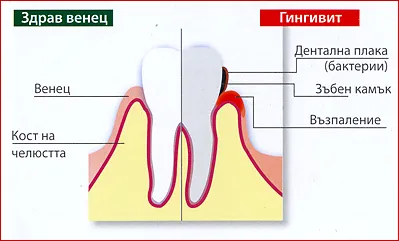
Gingivitis is inflammation of the gums – swelling and redness, sometimes with pain and bleeding. It is most often caused by a build-up of dental plaque, in which the bacteria that cause the inflammation develop.
The first signs vary. Be careful if you notice:
- bleeding gums when brushing your teeth;
- red or swollen gums;
- persistent bad breath;
- pain.
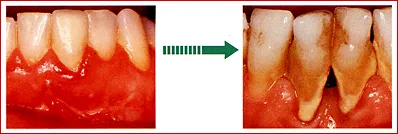
Many factors affect the condition of the gums: tartar, smoking, diabetes, hormonal changes etc. At first the disease responds well to treatment, but if it is not treated, over the years it can lead to serious problems – receding gums and even tooth loss. We then speak of periodontitis.
How we treat it
Treatment of periodontitis begins with removing tartar and plaque – at the clinic this is done with a special ultrasonic device. The second stage is to remove the other causes too: poor-quality fillings, bad crowns or dentures, orthodontic anomalies.
The toxins that bacteria release damage the gum, the bone and even the cementum of the tooth. Dead tissue builds up in the gum pocket; the body responds with young tissue, which only contains the inflammation. The aim of the treatment is to remove the necrotic and the new tissue so that the periodontium can heal. There are special instruments for this – curettes, and the procedure is called curettage. It is done in parts, by groups of teeth.
Stages of the procedure
- Anaesthesia – giving a local anaesthetic.
- Removal of the supragingival and subgingival tartar.
- Removal of the necrotic tissue from the root.
- Removal of the granulation tissue of the gum.
- Rinsing the pocket with antiseptics.
- Dressing.
The procedure can be carried out in two ways:
- through the opening of the pocket, without a view of the periodontal tissues – the gentler method for the patient;
- surgically – the tissues are incised, the curettage is done under direct vision, then the tissues are repositioned and sutured.
In the second phase of treatment, surgical, prosthetic and orthodontic methods are used in addition to the therapeutic ones. All of them, however, are insufficient without medication, which is used in all phases.
Book an appointment
We work by appointment. If you cannot come, please let us know in good time so that we can give the slot to another patient.