

Implantology
Implants replace missing teeth together with their roots. They are placed in the jaw where the teeth are missing.
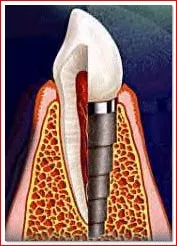
Implants replace
- a single tooth – a crown is placed on the implant;
- a group of missing teeth;
- supports for a fixed prosthesis (a bridge);
- they stabilise full removable dentures (“false teeth”).
Fixed prostheses on implants provide functional and aesthetic comfort. If the bone has receded where the tooth was extracted, it is built up surgically.
How they are placed
With some systems the implants stay under the gum while they integrate with the bone – from 3 to 6 months depending on the type and the system. An abutment is then screwed onto the implant and the new crown is fixed on it.
With other systems no waiting is needed: a crown is placed straight away and the patient has a tooth on the very day of the implant placement. Some systems allow the implant – and even a temporary crown – to be placed at the same time as the tooth is extracted. Implants are placed under local anaesthetic.
Can an implant be rejected?
Patients often ask about this. In practice there is no such danger: in science the growing-in of the implant is called osseo- or fibro-integration, and an integrated implant behaves like a natural tooth. With age all tissues atrophy, including the jawbones – natural teeth become exposed and loose, and the same applies to implants. The notion of “rejection” is mistaken.
A well-placed, high-quality implant lasts about 15–20 years – a lifespan considered a significant achievement.
Book an appointment
We work by appointment. If you cannot come, please let us know in good time so that we can give the slot to another patient.